








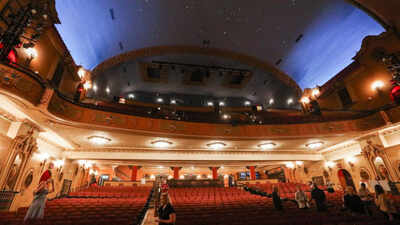
For a building designed to make moviegoers feel as though they were sitting beneath an open sky, the Orpheum Theatre has always offered more than entertainment. Nearly a century after opening its doors, Wichita’s historic landmark has entered a new chapter, reopening after a 15-month closure and a $13 million restoration that blends preservation with the demands of a modern audience, states an online report by KMUW 89.1 FM.
A theatre built to feel like the outdoors
As per reports, the Orpheum Theatre opened in 1922, at a time when atmospheric theatres were transforming the moviegoing experience. Designed with the appearance of a garden in Spain’s Andalusia region, the building was created to evoke the sensation of being outdoors beneath a star-filled night sky. Its elaborate interiors, atmospheric design and historic character eventually earned the theatre a place on the National Register of Historic Places. It was also among the earliest atmospheric theatres in the United States, making its survival particularly significant as many historic entertainment venues disappeared or were substantially altered over the decades, adds the report.
A long fight to preserve the landmark
The Orpheum’s survival was far from guaranteed. Preservationists stepped in during the 1970s to save the building, while successive theatre leaders spent decades undertaking renovations and repairs in stages. As per the report, the latest project represents the most substantial transformation in years. Rather than replacing the building’s distinctive character, the restoration focused heavily on bringing back elements that had defined the theatre since its early days.Original plaster moldings were fully restored, while historic paintwork, including the building’s distinctive chartreuse trim, received careful attention. The restoration also preserved the original star lights and hand-painted fire curtain, ensuring that the theatre’s visual identity remained intact, claims the report.
Modern upgrades behind the historic façade
While preservation was central to the project, the renovation also addressed the practical needs of contemporary audiences. New accessible seating has improved mobility access, while an air-conditioned balcony provides greater comfort in a space that had long lacked climate control.Additional concessions have also been introduced, including portable options intended to make service more convenient throughout the venue. Technology upgrades and new seating further modernise the theatre without stripping away its historic atmosphere, adds the online report.If we go by the online report, the $13 million project was funded through private donations and historic tax credits. A portion of the money has also been directed toward establishing the theatre’s first endowment dedicated to future capital and maintenance needs, creating a financial cushion for the landmark beyond the current restoration.
A new chapter begins
The reopening arrives with a fitting sense of occasion. Grammy-winning singer and songwriter John Legend performed at the theatre, marking the return of the venue to its regular role as one of Wichita’s cultural gathering places.After decades of preservation efforts and 15 months behind closed doors, the Orpheum is once again ready to welcome audiences. Its latest transformation demonstrates that historic architecture does not have to remain frozen in time. With its original details restored and modern necessities added, the theatre is moving forward while keeping its century-old identity firmly in place.Image Courtesy: Hannah Crickman/The SHOUT